
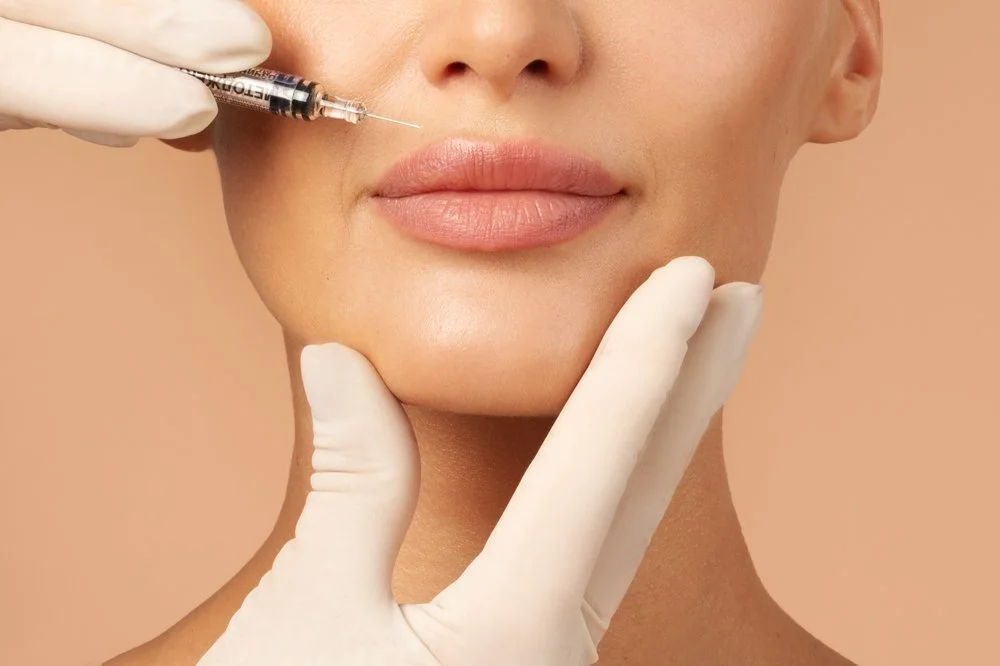
Restoring volume and balance: Restylane®
Thoughtful contour. Balanced fullness. Naturally you.
Restylane treatments can restore fullness, soften selected facial folds, and enhance contours. At Decatur Dermatology & Aesthetics, our approach starts with understanding your face and your goals, then planning treatment with care and restraint.
Understanding Restylane
Restylane is a family of injectable dermal fillers made with hyaluronic acid, or HA—a substance naturally found in the body that helps retain moisture.
The different Restylane formulations have properties suited to particular areas and treatment goals. The product selected for your lips, for example, may differ from the one recommended for your cheeks.
Unlike Dysport, which relaxes selected muscles, Restylane adds fullness and support in the areas treated.
Typical Treatment Areas for Restylane
Depending on the product selected and your individual assessment, treatment may address:
Lips and fine lines around the mouth.
Cheeks affected by reduced fullness.
Nasolabial folds—the lines running from the sides of the nose toward the corners of the mouth.
Marionette lines—the folds extending downward from the corners of the mouth.
Chin shape and profile.
Dr. Baender will go over the different treatment areas, and what you can reasonably expect from your Restylane treatment.
Results and Longevity
Initial improvement: added fullness is often visible soon after treatment, although swelling can affect the early appearance.
Settling: we’ll allow time for swelling to resolve before assessing the result.
Duration: longevity varies with the formulation, treatment area, amount used, and your individual response.
Appearance: the goal is balanced improvement that complements your features.
Restylane treatments are temporary. We’ll discuss the expected duration for your particular treatment and plan follow-up around your needs.
What to Expect During your Treatment Visit
Your visit begins with a discussion of your goals, medical history, and previous aesthetic treatments. Dr. Baender will assess your facial structure and explain the proposed plan.
The selected filler is injected using a fine needle. Many Restylane formulations contain lidocaine to help reduce discomfort; additional comfort measures may also be considered.
You may notice swelling, tenderness, redness, or bruising afterward. These effects can temporarily change how the treated area looks and feels.
Before you leave, we’ll explain aftercare, when to follow up, and which symptoms require prompt attention.
Cost and Insurance
Restylane treatment for cosmetic concerns is generally not covered by insurance.
Your cost depends on the formulation selected, the areas treated, and the amount of product needed. We’ll review the proposed treatment and cost before you decide to proceed. Payment is made in the office at the time of service.
Our Approach to Aesthetic Care
Aesthetic care should feel thoughtful, personal, and comfortable.
At Decatur Dermatology & Aesthetics, board-certified dermatologist Dr. Kelli Baender brings her understanding of skin health and facial anatomy to every treatment plan. We take time to listen, explain your options, and help you decide what fits your goals.
Whether you’re ready for treatment or simply exploring, we’re happy to talk it through.
Frequently Asked Questions
-
You don’t need to choose a product before your consultation. Different formulations suit different areas and purposes.
We’ll recommend an option based on your anatomy, the concern being treated, and the result you would like to achieve.
-
Restylane uses hyaluronic acid gel to provide fullness in selected areas. Sculptra stimulates collagen production, with improvement developing gradually.
They offer different approaches. We’ll help determine which best fits your concerns and preferred timeline.
-
Our goal is a balanced result that remains true to your features. We’ll discuss your preferences and use a measured approach, with reassessment before recommending additional treatment.
-
You may feel a brief pinch or pressure during the injections. We’ll discuss comfort measures and ask you to tell us if anything feels uncomfortable.
-
Many people resume daily activities after treatment, but swelling or bruising may be visible. Consider this when planning around work, travel, strenuous physical activities, photographs, or social events.
Follow the specific activity and aftercare instructions provided at your visit.
-
Common effects include swelling, bruising, redness, tenderness, itching, and lumps. Infection, allergic reactions, and delayed inflammation can also occur.
Rare but serious complications can result from filler entering a blood vessel, potentially causing skin damage, blindness, or stroke.
Seek immediate medical attention for unusual or severe pain, vision changes, white or dusky skin near the injection site, or stroke symptoms during or after treatment.
We’ll review benefits, risks, and alternatives before you decide.
-
Restylane products are indicated for adults over 21. They should not be used in people with certain severe allergies, relevant ingredient allergies, or bleeding disorders.
Treatment should be postponed where there is active skin inflammation or infection. Safety during pregnancy or breastfeeding has not been established.
Tell us about all allergies, medications, medical conditions, previous fillers, and recent or planned procedures so we can assess suitability.
-
Hyaluronic acid fillers can often be reduced using an enzyme called hyaluronidase. This is a medical treatment with its own risks, and complete removal or an exact return to your previous appearance cannot be guaranteed.
Careful planning remains important even when a filler can be dissolved.
-
Sometimes. Different concerns may benefit from fillers, Dysport, skin treatments, or a combination.
We’ll discuss whether combining approaches makes sense and plan the timing carefully, including time for healing and reassessment.
-
No. A cosmetic consultation is a place to start if you’re unsure. Bring your questions and tell us what you’d like to improve. We’ll explain the options without pressure to proceed.